
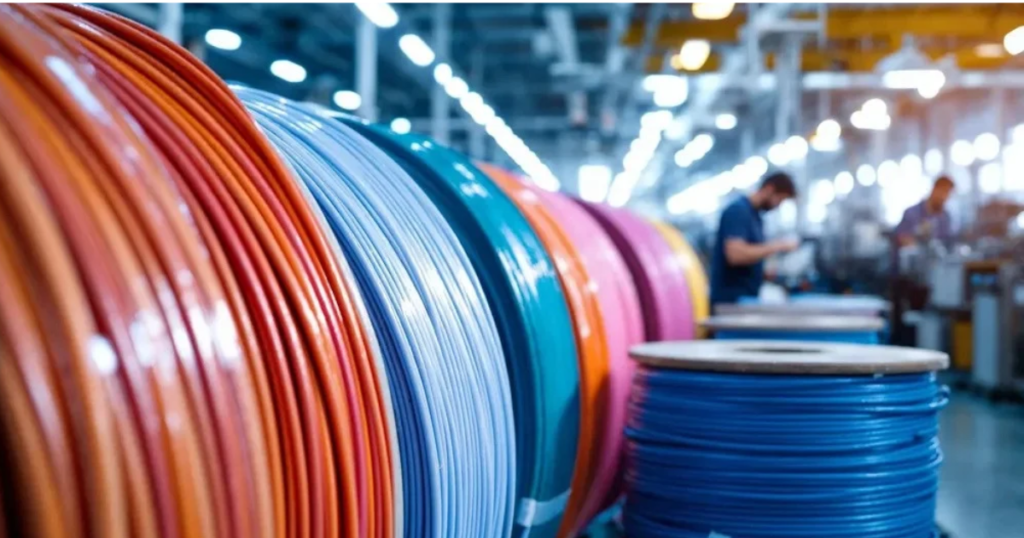
In the modern wire and cable manufacturing industry, high product reliability is not just a commercial advantage—it is a mandatory safety requirement. Whether power cables are deployed in heavy industrial grids, residential infrastructure, high-voltage transmission lines, or specialized automation setups, any insulation failure or conductor defect can lead to catastrophic electrical hazards, severe financial loss, and severe downtime.
To meet stringent international quality benchmarks, cable manufacturers must set up an advanced Quality Control (QC) laboratory equipped with high-precision testing instruments. In this detailed guide, we explore the core electrical and mechanical testing equipment required to achieve total standard compliance.
Why Is Quality Control Essential in Cable Manufacturing?
Quality testing in wire and cable manufacturing serves three crucial functions:
- Ensuring Operational Safety: Preventing short circuits, dielectric breakdown, and electrical fires.
- Compliance with Global Standards: Meeting required specifications such as IS 7098, IS 694, IEC 60502, and ASTM standards.
- Brand Reputation and Longevity: Minimizing product recall risks and maximizing insulation lifespan in harsh operating environments.
Key Electrical Testing Equipment for Cable Labs
1. High Voltage (HV) Test Sets
High voltage testing is the baseline requirement for checking the dielectric strength of cable insulation. It ensures that the insulation material can handle transient voltage spikes without breaking down.
- Primary Function: Applies a controlled AC or DC high voltage across the conductor and insulation jacket to detect voids, pinholes, or weak dielectric spots.
- Industry Value: Guarantees that the cable will operate safely under high electric field stress over its intended lifespan.
2. High Resistance Insulation Testers (Megohmmeters)
Insulation resistance directly reflects how well the insulating sheath prevents leakage current from escaping the conductor.
- Primary Function: Measures extremely high electrical resistance under DC voltage conditions.
- Technical Importance: Higher insulation resistance correlates directly with reduced power loss, superior dielectric integrity, and extended cable operating life.
3. Conductor Resistance Test Fixtures
Conductor resistance determines how much electrical current is converted into unwanted heat due to material impedance. High resistance leads to excessive energy loss and thermal degradation.
- Primary Function: Measures resistance in solid or stranded copper and aluminum conductors.
- Precision Requirement: Uses Kelvin 4-wire measurement technology to eliminate contact resistance errors and deliver accurate micro-ohm readings.
Essential Mechanical & Physical Testing Equipment
Electrical performance is directly tied to mechanical strength. The protective jacket surrounding the conductor must survive physical stress, environmental aging, and mechanical wear during installation.
1. Tensile Strength and Elongation Testers
Insulation materials such as PVC, XLPE, and rubber undergo mechanical tension tests before and after thermal aging.
- Purpose: Measures the maximum force the insulation sheath can withstand before breaking, as well as its elasticity percentage.
2. Thermal Aging Ovens
Thermal degradation weakens plastic insulation over time. Aging ovens simulate long-term operational heat exposure in an accelerated laboratory environment.
- Purpose: Tests physical property retention after sustained elevated temperature exposure.
Crucial Standards Every Cable Testing Lab Must Follow
To compete in national and global markets, testing procedures must strictly adhere to recognized standard frameworks:
- Indian Standards (IS): IS 7098 (XLPE Insulated Power Cables), IS 694 (PVC Insulated Cables).
- International Electrotechnical Commission (IEC): IEC 60502 (Power cables with extruded insulation).
- ASTM Standards: Standardized mechanical and material safety test protocols.
Why Choose Nutan Scientific Quality Control Solutions?
At Nutan Scientific, we engineer precision cable testing equipment tailored to the operational demands of cable and wire manufacturers. Our laboratory instruments are crafted for high accuracy, long-term operational stability, and full compliance with IS, IEC, and ASTM standards.
- High Precision & Calibration: Built to deliver repeatable, drift-free measurements.
- Robust Engineering: Designed for continuous duty in demanding laboratory environments.
- Customized Laboratory Setup: Tailored testing configurations to meet specific wire manufacturing requirements.
Conclusion
Building a fully equipped testing laboratory is an investment in product excellence, safety compliance, and long-term brand credibility. By integrating calibrated testing equipment into your manufacturing workflow, you guarantee that every meter of cable leaving your factory delivers safety and reliability.